MISSION AND MINISTRY: TOWARDS A MORE ENGAGED LAITY by Deacon Stephen Hayes

Writing within the context of southern Africa where he exercises his diaconal ministry, the author raises questions and makes proposals concerning forms of Orthodox lay ministry that may have relevance for other areas of the world.  
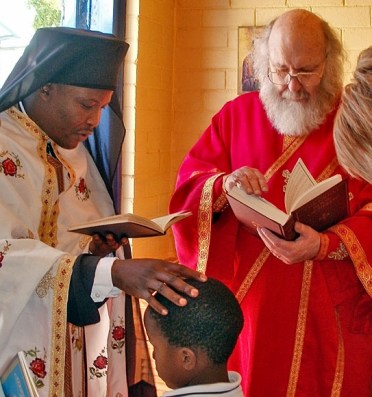
OLYMPUS DIGITAL CAMERA1      Introduction

Considerable publicity has been given to the revival of the ministry of deaconesses in the Patriarchate of Alexandria, but there are other ministries that are in just as much need of revival. If the Church is to grow and expand, it needs to be able to expand its leadership. In Africa we have seen many people baptised over the last 20 years, but very few have remained in the Church. If we are to retain new members we need to expand the pastoral ministry of the Church.

This paper offers some observations on specific pastoral needs, and proposals for how we can meet those needs by recognising lay ministries and training lay ministers.

2      Ordained and Lay Ministry

There are the ordained ministers of the Church: bishops, priests and deacons. Unfortunately, in many parts of southern Africa there are not enough men suitable for ordination, or the facilities to train them. At the very least, priests and deacons need to be able to serve the Divine Liturgy, and this requires skill in reading the texts in the Church’s service books, and in finding which texts to read. Many potential leaders do not have this skill, but can nevertheless be trained to lead in other ways.

There is a sense in which chrismation is the ordination of all Christians for ministry. While not all are called to be deacons, priests, or bishops, there are varieties of ministries among the laity. Read More


BROTHER-MAKING IN LATE ANTIQUITY AND BYZANTIUM: MONKS, LAYMEN, AND CHRISTIAN RITUAL reviewed by Kevin Elphick

Brother-Making in Late Antiquity and Byzantium: Monks, Laymen, and Christian Ritual
Claudia Rapp
New York: Oxford University Press, 2016

rappVenerable John and divine Symeon, united to God and united in soul to one another…
ever watch over us.

So reads the troparion for the feast of SS. Symeon and John of Emesa. In her book, Brother-Making in Late Antiquity and Byzantium: Monks, Laymen, and Christian Ritual, Claudia Rapp contends that the origins of the ceremony for “brother-making” (adelphopoiesis) are to be found in early monasticism (p. 4). Noting the prayer by which abbot Nikon commissions Symeon and John’s life together, Rapp comments, “This kind of prayer, I like to suggest, is the origin of the blessing of adelphopoiesis as we know it” (p. 159).

The 7th-century hagiography which describes their relationship explains the blessing in this way through words spoken by John to Symeon:

But for His sake that did join us together…. Thou knowest that after God, I have no one else but thee, my brother; instead, I have disowned all men and cleaved only unto thee…. We made a compact not to be separated from one another…. The two of us were just like a single soul, so that all were put into amazement by our friendship….

This life of St. Symeon from Syria was written by the Bishop Leontius of Cyprus. He hoped that his readers, by hearing that Symeon and John were “yoked” together as brothers in Christ, would emulate this example, so as to “guide our souls to life eternal” by imitating these “great luminaries” who led “an angelic way of life.” The heroes of Leontius’ narrative transcend gender. The holy pair acclaim of abbot Nikon that he, “after Christ, [is] our father and mother!” It is important to discern here that Nikon and Christ are invoked as both father and mother. And in a further act of gender-bending, Nikon perceives Symeon and John as “the pure bridegrooms of Christ,” escorted by candle-bearing eunuchs. Where typically one would expect true disciples to be the “brides” of Christ, instead a gender-transcending marriage is evoked, with Christ awaiting nuptials with the two men. Read More


IMMIGRANTS, COWS, AND THE GOSPEL by Giacomo Sanfilippo

Against the backdrop of the Nativity of Christ, on the day that we commemorate His circumcision in the flesh, my first article of 2018 reflects on the plight of immigrants and refugees, and asks what a non-theocratic “Christian politics” might properly look like in a secular democracy.

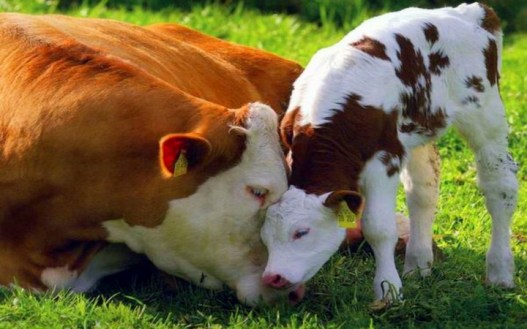
cow-and-calf-love-720x450In the days leading up to Christmas the Wisconsin Budget Project published a short report by Tamarine Cornelius on immigration. In focusing on the needs of Wisconsin’s dairy industry—and even on the need of the cows themselves for caregivers!—she adds yet another important voice to the substantial body of literature testifying to the economic benefits of generous and humane immigration policies. These kinds of studies shed needed light on complex questions of whether and how to integrate newcomers into the fabric of national, state, and local life—whatever their place of origin or the circumstances of their arrival.

As necessary as these statistical analyses are to the formulation of good policy, capitalist calculations of an immigrant’s usefulness to the body politic cannot suffice for those of us who aspire to the name of Christian. The Gospel never reduces the human person to what we can extract from him or her for our collective welfare, to a nameless and faceless cog in the gears of a dehumanized economic, social, or political machine. The Gospel places us in an encounter between two persons face to face, the eternal God and Creator appearing in human flesh and the human creature which He has lovingly fashioned in His own image.

Yet this direct encounter between heaven and earth, the Divine Person and the human person, quickly deteriorates into no encounter at all, an occasion of pietistic feel-goodism and self-delusion, if it fails to bear fruit day by day in the transformation of how we see, respond to, indeed identify with our neighbour—especially the neighbour most at risk of falling through the cracks of social, economic, and political structures over which he or she has little control. Read More


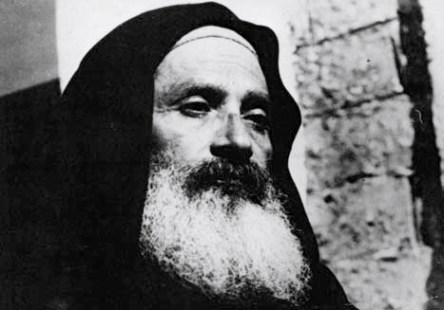
ON ADOPTION AND THE UNITY OF BELIEVERS IN THE BODY OF CHRIST by Matthew the Poor ~ Translated by Andrew Abdelmalek

Orthodoxy in Dialogue is deeply honoured to begin 2018 by offering the following extract* from Father Matthew the Poor for the first time in English. He is revered around the world as perhaps the greatest luminary of modern Coptic Orthodoxy. The full title of this article given by the translator is “On Adoption and the Doctrine of the Unity of Believers in the Body of Christ within the Meaning of Soteriology.” The bullet point format is reflective of Father Matthew’s original Arabic version. 

  • matthewpoorAdoption is a divine gift that we acquire through our union with the Person of Christ, the Son of God. It is not a mere relationship governed by will or emotions.
  • The most important aspect of our relationship to Christ is this union, the immediate result of Christ’s divinity and His consubstantiality with the Father. This is the foundation upon which the reality of salvation is built, together with all that pertains to our salvation from adoption, accepting eternal life with God, and acquiring the qualities of Christ for communion in His glory, which is the inheritance of the Father.
  • The sonship of mankind to God has become an inevitable reality because of the Son of God, given that adoption is the fruit of the Incarnation.
  • Adoption is also an aspect of “deification”, which is to say “union with God.” When we are united to the Incarnate Word, we become in Him true children through adoption, which is to say inheritors.
  • The fact which St. Athanasius affirms is that it was impossible for man to acquire adoption, not because of sin, but rather because of the created nature’s inability to receive adoption.
  • Therefore, this which the Son of God instituted in His body was for our sake and therefore was given to us.
  • Read More