ΕΑΝ ΕΠΙΛΑΘΩΜΑΙ ΣΟΥ, ΙΕΡΟΥΣΑΛΗΜ / SI OBLITUS FUERO TUI, IERUSALEM / IF I FORGET THEE, O JERUSALEM: AN ANALYSIS OF POPE FRANCIS’ UNNOTICED ECUMENICAL GESTURE by Liam Farrer

forgetThose who remember the hostility between the Orthodox and Catholic Churches prior to the 1964 meeting between His All-Holiness, Athenagoras I and His Holiness, Blessed Paul VI—and even those of us who have only heard of it via history—must acknowledge that the evolution of the relationship between the two Churches in the years since has been nothing short of remarkable.

Still, despite what His Beatitude Sviatoslav, Major Archbishop of the Ukrainian Greek Catholic Church, referred to last year as a “positive” change of emphasis in interaction, it is clear that an atmosphere of  mistrust still remains.  

Take, for example, the fact that  Orthodox Archpriest Leonid Kishkovsky felt the need to clarify that the Orthodox had not accepted papal primacy after the 2007 Ravenna Dialogue; or, that Catholic Father Mark Drew’s 2017 article on the 2016 statement of the Joint Orthodox-Catholic Commission for Theological Dialogue, while painting a balanced and nuanced picture of the Catholic positions, described the Orthodox position as talk of Rome “abandoning her errors and returning to Orthodoxy.” Read More


THE EVER-VIRGINITY OF THE THEOTOKOS by Giacomo Sanfilippo


With this brief reflection the editors wish our readers a blessed and joyful feast of the Nativity of the Most-Holy Theotokos and Ever-Virgin Mary.

burnbush

Η Φλεγόμενη Βάτος – The Burning Bush

Liturgically in the Orthodox Church we address the Theotokos—Θεοτόκος, Богородица, Născătoare de Dumnezeu, “Birth-Giver of God” (Dei Genitrix in Latin)—not only as the Virgin Mary, but as the Ever-Virgin Mary: ἀειπάρθενος, приснодева, pururea fecioara.  

The ever-virginity of the Mother of God, iterated and reiterated times without number in the lex orandi of the Orthodox Church, thus comprises an indispensable element of our lex credendi. This is to say not only that the Theotokos remains ever-virgin before, during, and after giving birth to the God-man Jesus Christ, conceived by the Holy Spirit without male intervention—the meaning of the three stars on her forehead and shoulders in her icons—but that it must be so. It cannot be otherwise. Her ever-virginity constitutes not only a dogmatic imperative, but first and foremost a scriptural imperative.

Scripturally, Mary and the Righteous Joseph the Betrothed could not possibly have gotten down to the business of sexual intercourse and having children after the pre-eternal God of the universe, Who called all things visible and invisible from non-existence into being, Who dwells in unapproachable light, Who walked with Adam and Eve in the cool of the evening, the God of Abraham, Isaac, and Jacob Who spoke as the nameless and unnameable One-Who-Is (ὁ ὤν in His halo) from the burning bush, Who sits enthroned upon the cherubim, before Whom the seraphim cover their faces in holy fear as they fly back and forth crying aloud Holy! Holy! Holy! had come forth from her virginal womb as a newborn human child—her own Creator, cradled in her arms and suckling at her breasts—making her and her body “more honourable than the cherubim” and “more glorious beyond compare than the seraphim.” Read More


THE PAPPAS PATRISTIC SUMMER INSTITUTE: AN ECUMENICAL READING COMMUNITY by John Solheid

pappas_PIDuring the academic year 2016-17, I was continually reflecting on William A. Johnson’s concept of “reading communities” (Johnson, Readers and Reading Culture in the High Roman Empire: A Study of Elite Communities, 2010). Naturally, as a student of Patristics, I focused my attention on how this concept applies to communities in the early Church.  However, from July 31 until August 5 of this year, I participated in the annual Pappas Patristic Institute held at Holy Cross Greek Orthodox School of Theology in Brookline MA.  This was the second time I participated in the program, after attending in 2015, but missing 2016.  This year I left with a greater appreciation not only for how “reading communities” function, but also for the vital role of the shared reading of texts both in the life of the Church and in the spiritual development of my soul.

In order for a reading community to materialize, the group must share some common beliefs about the texts being read.  In particular, the community must have a common belief about what texts are important to read, why those texts are important to read, and how those texts function to create a sense of communal identity (Johnson, 12-16). 

The Pappas Patristic Institute possesses all those characteristics.  All the participants share a common belief that the Church Fathers are important to read.  We also share a common belief that the Fathers are important to read because, as the foundations of the Christian tradition, they continue to have relevance and meaning for today.  Read More


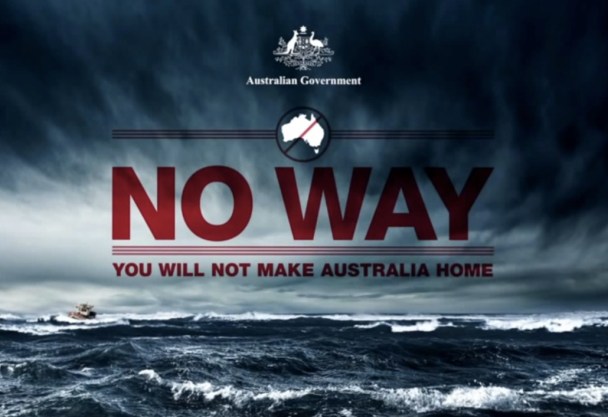
A REFLECTION FROM DOWN UNDER: REFUGEES, ECUMENISM, AND ORTHODOX ENGAGEMENT by Dennis Ryle

australia-refugees

I am an ordained Churches of Christ* minister in Australia who has experienced engagement with refugee resettlement and advocacy over the most part of four decades. Various congregations I have served have led the housing, equipping, and orientation of families from Vietnam, Laos, Bosnia, Iraq, and Afghanistan. We have befriended those whose faith backgrounds have been Buddhist, Catholic, Orthodox, and Islamic.  Where possible and appropriate, we have eventually been able to refer families and individuals to their own faith communities.

This ministry—which only nibbles at the edge of the growing world refugee crisis—is necessarily ecumenical, pooling the resources of churches through the Australian National Council of Churches and what is now its National Refugee Task Force. A number of Eastern Christian Churches are represented on the Council: the Antiochian Orthodox Church, the Armenian Apostolic Church, the Assyrian Church of the East, the Coptic Orthodox Church, the Greek Orthodox Church, the Indian Orthodox Church, the Mar Thoma Church, the Romanian Orthodox Church, the Serbian Orthodox Church, and the Syrian Orthodox Church. [Editors’ note: Notably absent from the list is the Russian Orthodox Church’s Australian and New Zealand Diocese.] Read More