REFORMATION 500: WHEN REFORMERS SOUGHT ACCORD WITH THE ORTHODOX by Cameron Davis

This is the third article in our Reformation 500 Series.
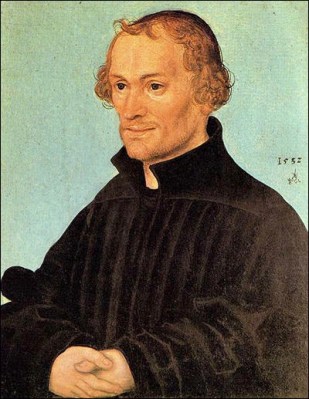
melanchthon

Philip Melanchthon

Though largely unknown to modern Christians, appeals to the Greek Church in both rhetorical usage and actual correspondence were pivotal during the formative years of the Reformation. In 1519, during the Leipzig Debate against Catholic interlocutor, Johann Eck, Martin Luther stated that the Greek Church had never accepted Rome’s claim to papal supremacy, and that it was the Greek Church that had produced the early Church’s finest theologians.

This and other comments made by Luther during his lifetime reveal that he held a generally positive view of the Greek Orthodox tradition, though his statements about the Greek Church were often made for polemical purposes. As such, many have concluded that Luther never engaged with the Orthodox tradition in any meaningful way, and that his statements should be viewed in this light.

The same, however, cannot be alleged of Luther’s comrade, Philip Melanchthon.  Melanchthon has been called the mind behind the Reformation, a claim evidenced by the fact that he was the primary author and editor of the Augsburg Confession. He was a gifted linguist who excelled in both Greek and Latin, and was as familiar with the Church Fathers as was feasible during the 16th century. In his seminal work, Loci Communes, he makes several references to Church Fathers, including St. John Chrysostom, St. Basil the Great, and St. Gregory the Theologian. Melanchthon also demonstrates a profound interest in church history. Read More

“TRANSGENDERISM” ISN’T A THING by Giacomo Sanfilippo

“Transgenderism” isn’t a thing.

But there are fully human persons who—for reasons that we cannot possibly begin to comprehend—feel so disconnected from the biological sex of their own body that the effort just to stay alive becomes day by day a losing battle.

To speak of the slowly ebbing strength to go on living is no exaggeration for too many transgender persons. It’s a stark, statistical fact: unable to escape their own anatomy, and the mockery or hostility or impossible expectations of their families, their societies, their churches, they peer in alarming numbers into the abyss of non-being and see no other recourse but to fall headlong into its bottomless depths. 

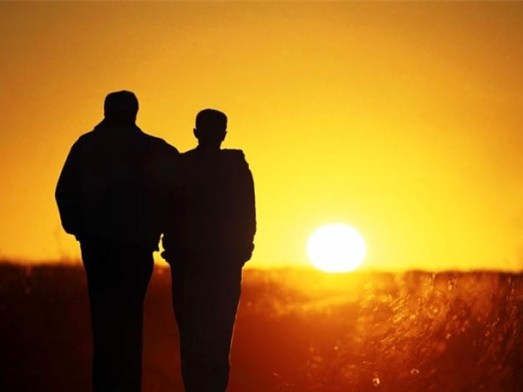
fathersonI can’t speak or write of these things without tears flowing down my face. I’m the father of a 35-year old transgender son. He’s probably the person I love most of all in the world. This isn’t to say that I love him “objectively” more than my other four sons, or more than my granddaughter, or my soon-to-be-born second granddaughter.

I mean that he occupies a place in my heart that I did not know existed, a place deeper than the rest of my progeny because a place more painful—and more painful because I cannot fathom the courage it takes to live his life, to walk out the front door and face the world morning by morning, moment by moment. Read More


I AM THE CHURCH by Protopresbyter Nicolas Kazarian

kazarian

Protopresbyter Nicolas Kazarian

I am the Church.

This sentence may seem presumptuous for many, and I completely agree with them. Who would dare to say that he or she is the Church? Who has the authority to claim to represent the whole body of Christ? No one! However, I am not talking about the Church’s authority, but rather the Church’s opportunity to be present in one’s life.

I would like to reflect here on the priesthood and the life of the Church after the powerful lesson I received while visiting George (his name has been changed) at the hospital. He is dead now—may his memory be eternal—but I have kept in mind a private thought I had after one of my visits: “I am the Church.”

Let’s go back to the beginning. A couple of months ago, the church office received a call from the nearby hospital. A 40-year old Greek Orthodox man, George, was very sick and about to start chemotherapy and 24/7 dialysis. He had married less than a year earlier, no kids. He was often sleepy when I came to visit him, due to the painkillers he was prescribed and the fatigue of the treatment. Read More


DEATH AND LIFE by Silouan Green

silouangreen

Silouan Green

The consequences of death and destruction have become old friends. Friends I meet daily in my work helping law enforcement, veterans, communities, and trauma victims understand how to overcome the horrors that life can bring to bear upon us. Last week was a normal one, heartbreaking. Here are just some of the experiences explored in my talks and workshops during that time:

  • A young veteran who described the horror of grabbing at his burning leg after being hit by a rocket, and then pulling away his hand to see it dripping with melted fat and flesh.
  • A rookie police officer of only a couple of weeks who rolled up on a scene to find a dead 6-year old, whom he had to carry in his arms to the wailing screams of the young child’s family.
  • A woman who was violently and repeatedly raped as a child by family members, and now had dedicated her life to helping others like her, yet was still wrestling with her own demons.
  • A former Marine who shared the toll of war on the company he served with in Iraq: 11 suicides and counting.
  • A young woman who was going through a divorce and facing life alone in a city without family.
  • And during all of this, I was preparing for a weekend with families who had lost loved ones serving in the Armed Forces. 

Just a normal week.

Read More