A TRANS READING OF SALVATION HISTORY: IS IT POSSIBLE? by Kevin Elphick

EDITOR’S NOTE: We publish the present thought experiment as part of Orthodoxy in Dialogue’s commitment to the well-being of transgender Orthodox Christians and to their full inclusion in the Church’s life. This does not mean that we agree with the author’s exegesis, in whole or in part, but that we consider it vital to hear a diversity of voices in the conversation surrounding the theological, spiritual, and pastoral question of transgender identities.
In observance of Pride Month, we welcome other contributions on the subject of sexual and gender variance in human nature and its place in ecclesial life.

Does the Judeo-Christian tradition contain anything that resembles gender transition? Do our Scriptures record anything akin to recognizing a valid gender experience other than the gender one is assigned at birth? A kneejerk reaction to these questions would immediately suggest an answer of “no.” But is another perspective possible upon further reflection?

What of the Genesis account of the creation of Adam and Eve?

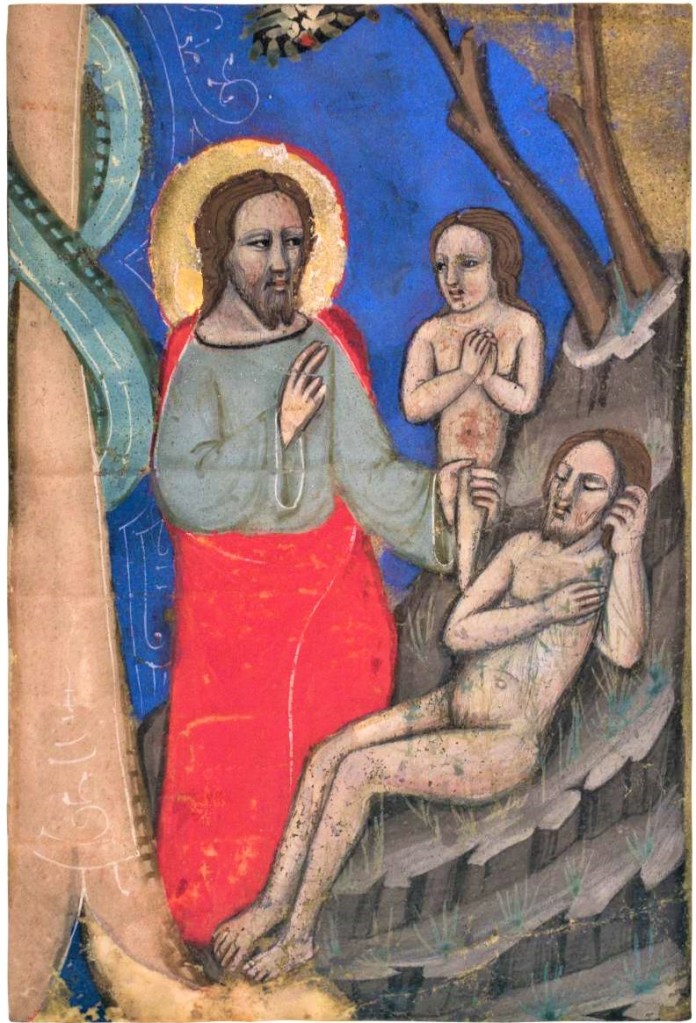
So the LORD God cast a deep sleep on the man, and while he was asleep, he took out one of his ribs and closed up its place with flesh. The LORD God then built the rib that he had taken from the man into a woman. (Gen 2:21)

Here God takes the male flesh of Adam and transforms it into a woman. Flesh which was previously male is now fully female. How might our transgender sisters and brothers hear this creation narrative? Does it speak to them? We did not have to go far to find a gender transition; it is right there in the second chapter of Genesis.

And while the sleep which God cast upon Adam might sound like prep for reconstructive surgery, genital alteration was not involved in this story. Genital reconstruction is part of the contemporary transgender experience. Is anything like this found in Scripture? In this same first book of the Bible, we find God entering into the Covenant of Circumcision with Abram (Gen 17:10). Surgical alteration to the phallus of every male is required with this biblical covenant. Anthropologists have long observed that circumcision is found in various cultures throughout the world. They note that the ritual often connotes a feminization of the recipient. Female genitalia bleed monthly; with circumcision, the phallus ritually bleeds also. The importance of this ritual bleeding is emphasized in the Exodus text in which the wife of Moses circumcises their son. “But Zipporah took a piece of flint and cut off her son’s foreskin and, touching his feet, she said, ‘Surely you are a spouse of blood to me.’” (Ex 4:25)

Read More

CLOSEST TO THE HEART: A MYSTAGOGY OF SPIRITUAL FRIENDSHIP IN PAVEL A. FLORENSKIJ’S THE PILLAR AND GROUND OF THE TRUTH reviewed by Giacomo Sanfilippo

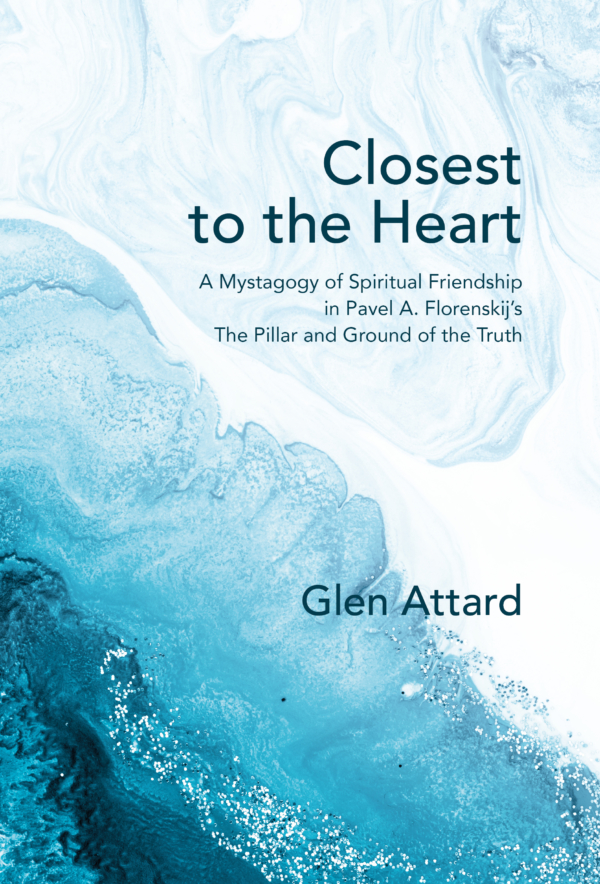
Closest to the Heart: A Mystagogy of Spiritual Friendship in Pavel A. Florenskij’s The Pillar and Ground of the Truth
Glen Attard
Ħal Qormi, Malta: Horizons, 2020

Father Glen Attard’s book puts me in an unusual spot for a reviewer. Unbeknownst to each other at the beginning of our projects, the author and I were both working on a doctoral thesis/future book on the same topic at the same time. He became aware of me and my work when Public Orthodoxy published my Conjugal Friendship in May 2017; and I, of him and his work when he emailed me in February 2018 to introduce himself as a colleague in Florensky scholarship. He conveyed his disagreement with the central premise around which my entire thesis revolves: to wit, that Father Pavel Florensky wrote “Friendship,” the culminating chapter of The Pillar and Ground of the Truth, as his theological and spiritual response to the era’s—and his own—preoccupation with the recently coined and theorized “homosexuality.” In response to Attard’s request for something more substantive to support my reading of “Friendship,” I referred him to the chapter on Florensky in my MA thesis, a few short pieces of mine at Orthodoxy in Dialogue, and especially my more adequately annotated Father Pavel Florensky and the Sacrament of Love, scheduled to appear a few months later in The Wheel. I wrote again to let him know when the latter came out. My doctoral thesis proposal, Conjugal Friendship and the Sacrament of Love: Father Pavel Florensky’s Orthodox Theology of Same-Sex Love, was not posted publicly at academia.edu until one month after Attard’s book appeared in print. The timeline of our correspondence and my online publishing record proves relevant later in this review.

Read More

Seeking Orthodox Scholar to Contribute Chapter for EVENT & RELIGION: THE RECEPTION OF JOHN D. CAPUTO’S WEAK THEOLOGY IN EUROPE by Martin Koci and Joeri Schrijvers, Eds.

John D. Caputo

John D. Caputo has recently proposed a “weak theology.” This theology is said to focus less on rigid dogmatic formulas of traditional religion, and more on ethical themes such as hospitality and openness to the stranger. Caputo’s work has gathered a significant number of followers in the United States, where he is one of the main theologians today.

Event and Religion proposes to evaluate this new form of religion from out of the various religious and theological backgrounds from Europe’s main countries. Is only a rather secular mindset able to welcome Caputo’s thinking, or does it sit well with a more traditional stance toward religion? The aim of this volume is to gather Catholic, Protestant, and Orthodox voices around Caputo’s work to evaluate the match with the European context.

We are seeking an Eastern Orthodox scholar who engages critically with Caputo’s work in a European context. How does Caputo’s weak theology blend (or not) with the Orthodox tradition? Or, more generally, has there been an Orthodox reception of Caputo’s theology at all? If not, why not? These questions would all make for a fine contribution in this volume, which seeks to portray contextual theologies (and philosophies) throughout Europe in their response to “radical theology.” Is such radical theology but a “secular translation” of theology proper? Or is it a new, valid, valuable path for theology to proceed in a largely secular West?

Read More