For the troubled recent history behind the present article see, among other sources, the website of the Ecumenical Patriarchate, Wikipedia, the Foreign Policy Association’s June 2014 “Obama Administration to Turkey: Reopen Halki Seminary” by Hannah Gais, and the recent statement of Greece’s Ministry of Foreign Affairs.
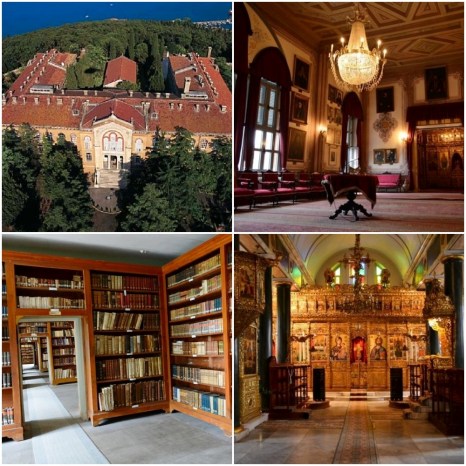
Halki Theological School (Θεολογική Σχολή Χάλκης)
The Holy Theological School on the island of Halki (Heybeliada), one of the Princes’ Islands in the Sea of Marmara, has remained closed for almost 50 years, yet not a year has passed without it attracting hundreds of visitors and international attention. However, it may soon be eclipsed by a more grandiose religious establishment. While negotiations about the reopening of the seminary remain ongoing, Turkish authorities have announced a plan to erect a colossal new Islamic educational center in the middle of the island.
According to an official announcement by Haydar Bekiroglu, president of the Turkish Directorate of Religious Affairs, a new center of Islamic studies spanning a total area of 200 acres is scheduled to be built on Halki, less than a kilometer away from the Orthodox seminary where no lessons have been held since 1971, following the introduction of a Turkish law banning private higher education institutions. Early last week Bekiroglu announced that the administration is already in talks with the local urban planning authorities, and hopes to get approval for the ambitious project soon.
The plans for the new Islamic educational center on the island off the coast of Istanbul are not an isolated incident. Over the past year, the Turkish government has made the expansion of religious education in major cities a clear priority. “It is urgent to strengthen the religious educational infrastructure in every corner of Istanbul, the cradle of our civilization,” said Bekiroglu in an official statement, adding that the majestic 200-acre institution will include dormitories that will host dozens of Islamic scholars from Turkey and abroad. Read More

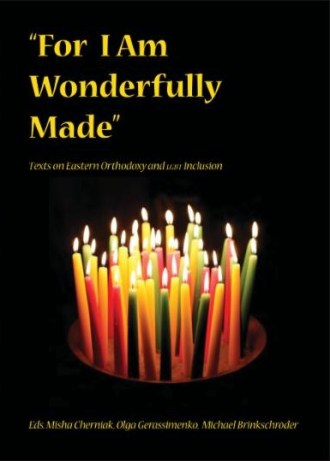 Before I began writing this review I had to do some internet sleuthing to uncover basic facts about the book. This is not to suggest that the editors had anything to hide, but simply that the format of the title and copyright pages does not make sufficiently clear who (and where) the actual publisher is, and who the collaborating agency. In the end an ISBN search solved part of the puzzle.


