ONE WOMAN’S STORY: MENTAL HEALTH, AUTISM, AND ORTHODOX PASTORAL CARE by Monica Spoor

Theologians outside of the Orthodox Church have begun to explore possibilities for a “theology of disability” in conversation with the developing field of disability theory. Orthodoxy in Dialogue publishes Ms. Spoor’s testimony as a call to Orthodox theologians, pastors, thinkers, health care practitioners, and persons with disabilities to collaborate in forging a uniquely Orthodox theology of disability.

Chaplin-cover

The other day, I read the article Father Isaac Skidmore published on Orthodoxy in Dialogue about the church and mental health [On Mental Health Referrals by Orthodox Clergy]. It managed to drag up some memories of quite an unpleasant time some years back, which made me want to respond to and confirm what Father Isaac wrote in his quite excellent article from my point of view—the point of view of someone who has spent time with various churches, as well as mental health professionals, since around the age of 17. Read More


ORTHODOXY, BANDERITE PRIDE, AND STORIES FROM ABROAD by Giacomo Sanfilippo

The following appeared yesterday as an op-ed at the Kyiv Post at the same time as our Metropolitan Epiphanius to Join Ranks of…Elie Wiesel and Mother Teresa? was going to press.

Ukrainian activists from Svoboda and Right Sector political parties carry torches as they march in Kyiv to mark the 110th anniversary of Stepan Bandera’s birth on January 1, 2019. (Photo by Volodymyr Petrov for the Kyiv Post.)

Apparently, I don’t stand alone among children, grandchildren, and great-grandchildren of Ukrainian immigrants in feeling alarmed at Metropolitan Epiphanius’ sympathy—or at least tolerance—for right-wing nationalist extremism within the ranks of the newly autocephalous Orthodox Church of Ukraine (OCU). I have addressed this issue twice for the Kyiv Post: first, on June 28 in Nationalist Extremism the Scourge of the Orthodox Church, and again, on August 6 in A Painful Tragicomedy Comes to an End…and Another Begins? Read More


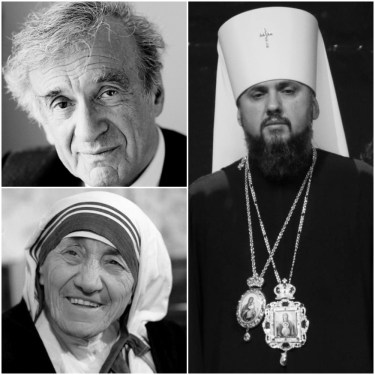
METROPOLITAN EPIPHANIUS TO JOIN RANKS OF…ELIE WIESEL AND MOTHER TERESA?

Orthodoxy in Dialogue has shown unstinting support for the recent grant of autocephaly to the Metropolitanate of Kyiv (Orthodox Church of Ukraine) by the Patriarchate of Constantinople (see the extensive Ukraine section in our Archives)—yet not without serious questions and occasional criticisms for each ecclesiastical bureaucracy and its respective Primate when warranted.
The following astonishing and frankly embarrassing report appeared earlier today on the Panorthodox Synod website with the title Metropolitan Epiphanios of Kyiv and All Ukraine to Receive the 2019 Athenagoras Human Rights Award. We republish it here with editorial interpolations of our own.

pjimage (28)

Elie Wiesel, Mother Teresa of Calcutta, Metropolitan Epiphanius of Kyiv

Archbishop Elpidophoros of America, Exarch of the Ecumenical Patriarchate, together with Archon National Commander Dr. Anthony J. Limberakis, will present the Athenagoras Human Rights Award to His Beatitude Metropolitan Epiphanios of Kyiv and All Ukraine at the New York Hilton Midtown on October 19, 2019. Metropolitan Epiphanios has been a strong advocate for religious freedom and a key defender of the ecclesiastical and canonical prerogatives of the Ecumenical Patriarchate. Read More


PATRIARCH BARTHOLOMEW KEYNOTE SPEAKER AT THE TENTH WORLD ASSEMBLY OF RELIGIONS FOR PEACE

✠

Nobody—not a nation, not a state, not a religion, nor science and technology—can face the current problems alone.
We need one another.

Patriarch Bartholomew of Constantinople

His All-Holiness Ecumenical Patriarch Bartholomew attended the 10th World Assembly of Religions for Peace in Lindau (Germany) from 20-23 August 2019 where he delivered the keynote address. Religions for Peace, in partnership with the Foundation Peace Dialogue of the World Religions and Civil Society, is the world’s most representative, multi-religious gathering of religious communities. Every 5-7 years, Religions for Peace convenes a World Assembly for the purpose of forging a deep moral consensus on contemporary challenges, electing a new World Council and advancing multi-religious action across and beyond the Religions for Peace network. Read More