This is the third article in our On the Incarnation series for the Nativity Fast.
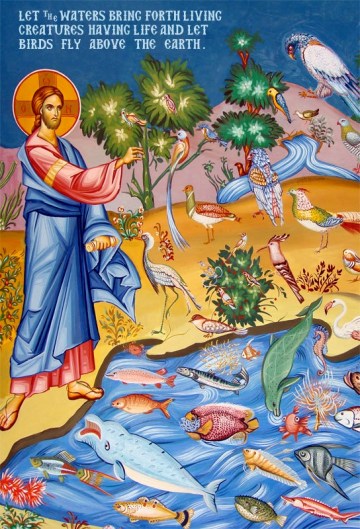 When St. Athanasius in the 4th century addressed the centrality of the incarnation of Christ and His subsequent redemption of all creation via His death on the cross, he also justified the use of icons in Christian worship. (See Athanasius, On the Incarnation.) His appeal wasn’t aesthetic or moral, but theological, albeit a theology rooted in the Gospel. The denial of iconography vis à vis honoring the cross, he claimed, was a denial of the intrinsic goodness of creation, and thereby also a denial of the incarnation. Denying the incarnation, he said, was of the spirit of the antichrist (1 Jn 4:2).
We often do not think about iconography in such ultimate terms, and it may even sound somewhat harsh. But for Athanasius, icons such as the cross are significant on a deep level precisely because they are material objects, not despite that fact. Matter is not primarily a hindrance or a difficulty with which we must contend, but it is salvific; matter saves us.
The Gospel story emphatically declares: Christ, who as the discarnate Logos is the second Person of the Triune God, was made flesh, a fully material human being, in the person of Jesus of Nazareth. Through this act alone, all matter becomes subject to redemption and is now not only good because God declared all of creation to be good, but all matter carries the potential for purity, or holiness. The wood of the cross of Christ, Athanasius argues, is transformed from mere wood into the vehicle of redemption for the entire cosmos; it is therefore legitimate to value matter because it is through matter that we are redeemed. Read More


 ORTHODOXY IN DIALOGUE