HOW TO BE A SINNER reviewed by Archpriest Timothy Cremeens

How to Be a Sinner
Peter Bouteneff
Yonkers NY: St. Vladimir’s Seminary Press, 2018
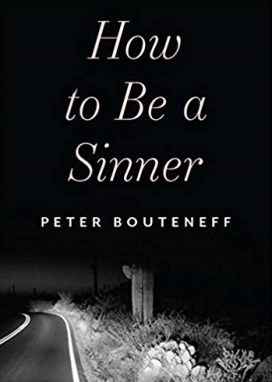
sinnerI remember when I first saw the cover of this book I thought, “I must have read the title wrong.” So I did a double take and, lo and behold, it was what I had read: “How to Be a Sinner.” Are they serious? What a crazy name for a book, especially for a book published by an Orthodox Christian press. Besides, who needs a book on how to be a sinner? We’re all pretty good at it already. Right?

Over the past several decades the term “sinner” has fallen on hard times. Sin and sins have recently been replaced with more nuanced words like mistakes, inappropriate behavior, addictions, phobias, etc. Those who commit these errors are not sinners but rather victims of prejudice, narrow-mindedness, racism, sexism, chauvinism, to name a few. The very definition of what is a sin is myriad, and no agreement can be reached. Those who even suggest that there is such a thing as sin are in some circles thought to be psychologically warped.

For all the above reasons, Peter Bouteneff’s book is so important. A professor at St. Vladimir’s Orthodox Theological Seminary, he deals with several different aspects of the topic, from Scripture, the liturgical services, the writings of the Fathers/Mothers, and everyday practical issues. In the introduction he states that the goal of his writing “revolves around reorienting our understanding of how to ‘successfully’ be a sinner” (p. 18). He enumerates those goals:

  • To see a genuine “sinner identity” as realistic and healing rather than neurotic
  • To understand that identity as holistic, rather than divisive
  • To cultivate a self-love that is healthy, rather than narcissistic
  • To find self-acceptance that is realistic and constructive, rather than libertine

Read More


OUR “FEEDING THE HOMELESS ON CHRISTMAS” CAMPAIGN TO CLOSE SATURDAY

homelessjesusjpg-55c08e8ca366cdc0

Orthodoxy in Dialogue’s Feeding the Homeless on Christmas campaign on GoFundMe will accept donations no later than this Saturday evening, December 22. We’re just a little over $1400 short of our $5000 goal.

Can you help? We’re pleased to accept any amount with deep gratitude.

You can read our original and follow-up post about this project here and here.

You can go straight to our GoFundMe page here.

Please pray for the success of this project, and for the well-being of all those who will benefit from it.

Read More


UKRAINIAN AUTOCEPHALY: AN AWKWARD SPOT FOR THE OCA by Giacomo Sanfilippo

The Orthodox Church in America (hereinafter the OCA) is one of multiple overlapping Orthodox jurisdictions in North America. Because its dioceses cover the US, Canada, and Mexico, its bishops sit as members in one of three interjurisdictional Assemblies of  Canonical Orthodox Bishops: that of the United States, Canada, or Latin America.
As can be read here, on March 31, 1970 the Soviet-controlled Moscow Patriarchate and the schismatic Russian Orthodox Greek Catholic Church of America (popularly known as “the Metropolia”) entered into an Agreement which resulted in the immediate restoration of communion between them and—ten days later—a Tomos of Autocephaly granted by the former to the latter, followed soon thereafter by the name change of the latter to the Orthodox Church in America.
Almost a half-century later, in 2018, the OCA’s autocephaly remains unrecognized by most of the Orthodox Church—although no Patriarchate or autocephalous metropolitanate has ever broken communion with the OCA or Moscow over the issue. 
Yet even the Moscow Patriarchate continues to apply a selectively limited meaning to the term “autocephaly” in the OCA’s case insofar as the Russian Church retains control of two separate jurisdictions on American soil: The Patriarchal Parishes in the USA: Moscow Patriarchate and the better known—and until 2007 schismatic—Russian Orthodox Church Outside of Russia (ROCOR).   
synod

Metropolitan Tikhon, Primate, and the Holy Synod of the OCA

This article is not “anti-OCA.” Despite the OCA’s long history of unanswered questions vis-à-vis the nature of its relationship with Moscow, of missed opportunities, and of outright failures—including the scandals surrounding the  “retirement” of the three consecutive primates immediately prior to the current one (see here for a partial record of this period)—and despite the injustices that I have endured personally at the hands of the Holy Synod for the past twenty-three years, I remain fundamentally pro-OCA. (I do not, however, attend an OCA parish.) The OCA still represents the only concrete, albeit mishandled attempt to establish an ecclesiastical structure in North America that is both ecclesiologically and canonically correct. For now we can overlook the anomaly of its own three non-territorial ethnic dioceses—Albanian, Bulgarian, and Romanian—given that their bishops too hold full membership in the OCA’s Holy Synod.  Read More


PRINCETON SUED BY ECUMENICAL PATRIARCHATE

Church Leaders Sue Princeton Over ‘Stolen’ Manuscripts

by Colin Moynihan

They are simultaneously sacred texts and works of art, three illuminated Byzantine-era manuscripts that are more than 1,000 years old and that for decades have been part of a heralded collection at Princeton University.

ladder4

The Ladder of St. John Climacus

The college received the items as a gift in 1942 from a trustee and alumnus who had bought them from a German auction house nearly 20 years earlier.

But in a lawsuit filed Thursday, the spiritual leader of the Eastern Orthodox Church said the manuscripts were stolen and demanded their return, asserting that they had been taken during World War I from a monastery in Kormista, a village in northern Greece.

The plaintiffs in the federal suit filed in New Jersey, including Ecumenical Patriarch Bartholomew I of Constantinople, say that Bulgarian guerrilla forces stormed the Theotokos Eikosiphoinissa Monastery in 1917, assaulted the monks who lived there and made off with a trove of ancient texts.

Among the evidence cited in the lawsuit is a volume, “Greek Manuscripts at Princeton, Sixth to Nineteenth Century: A Descriptive Catalogue,” which was published in 2010 and identifies some manuscripts in the school’s collection as having been removed from the monastery in 1917 by Bulgarian authorities.

“This is Princeton’s book, issued by the Princeton press, about Princeton’s collection, written by Princeton employees,” said George A. Tsougarakis, a lawyer for Hughes Hubbard & Reed in New York, which represents the patriarch, the monastery and regional church officials in the case. “In our view that’s about as concrete an admission as you could get.”

The university said in a statement Friday that it had full confidence that the provenance research it has done establishes that the manuscripts were not looted. Read More