VIDEO: THE FUTURE OF ORTHODOX CHRISTIANITY IN UKRAINE by José Casanova, Shaun Casey, George E. Demacopoulos, Nadieszda Kizenko, and Aristotle Papanikolaou

baptismkyiv

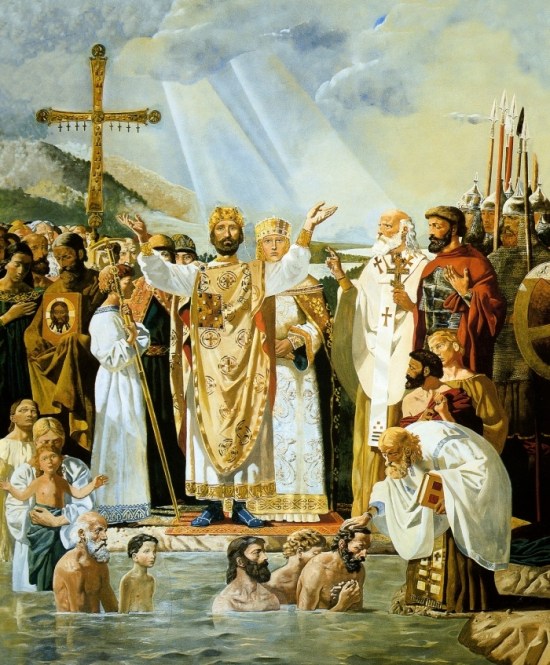
SS. Volodymyr and Olha, Equals-to-the-Apostles, and the Baptism of Kyivan Rus’

This panel discussion was held on December 4, 2018 at Georgetown University’s Berkley Center for Religion, Peace, and World Affairs in Washington DC and co-sponsored with the Orthodox Christian Studies Center at Fordham University.

The Berkley Center describes the event as follows on its website:

In October of 2018, the Orthodox Church’s Istanbul-based leader, Ecumenical Patriarch Bartholomew, announced that he will grant autocephaly (independence) to the Ukrainian Orthodox Church, which has been under the jurisdiction of the Russian Orthodox Church. As religious tensions between the newly established Kiev Patriarchate and the Moscow Patriarchate develop, the future of the Orthodox Church remains uncertain. Panelists discussed the political, theological, historical, and geopolitical dimensions of these recent events in their commentary, as they assessed the current status and future opportunities for the church in Ukraine.

Orthodoxy in Dialogue is sharing this video in the interests of open debate on a topic of great importance to our readers around the world. Read More

QUEER THEOLOGY: BEYOND APOLOGETICS reviewed by Jonathan Murden

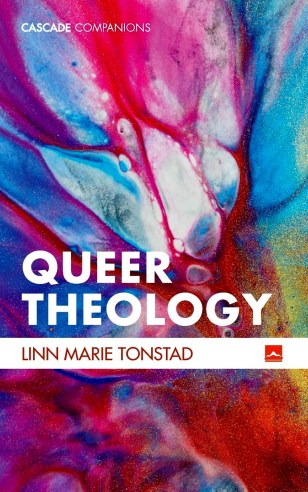
Queer Theology: Beyond Apologetics
Linn Marie Tonstad
Eugene OR: Wipf and Stock Publishers/Cascade Books, 2018

queertheologyIncreasingly, Orthodox Christians—whether clergy, theologians, or ordinary faithful—are finding it necessary to engage in conversations about gender and sexuality. However, many of these conversations often seem distinctly lacking in depth. On the one hand, “traditionalists” will cite proof texts from the Scriptures or the Tradition without recognising the historical gap between contemporary relations and identities and those referred to in our historical texts. On the other hand, those critical of the existing status of LGBT+ people within the Church often have little more to say on the question than an affirmation of God’s loving embrace of all people, perhaps with scriptural or patristic proof texts of their own. Between either camp, there is often little attention paid to the distinct spiritual needs and contributions of sexual minorities in the Church.
In Queer Theology: Beyond Apologetics, Linn Marie Tonstad suggests that this failure of Christianity to really respond to LGBT+ people, both within and without the bounds of Christianity, may be a result of too great a focus on “apologetics,” that is, a narrow focus on justifying this or that stance on marriage or ordination (or occasionally, gender transition), rather than on what questions surrounding gender and sexuality might contribute to theology more broadly conceived. Tonstad runs quickly through a number of popular apologetic strategies in contemporary “queer theology,” including, for example, arguments from God as genderless, the potential corruption of Jesus’ message by the bigoted Paul, and idea of God’s love as intrinsically “transgressive.” Ultimately, Tonstad finds most of these arguments dissatisfactory, or at least uninspiring, but some—Tonstad especially notes “the nexus of arguments from food, circumcision, and judgement” (p. 47) in Paul—are worth spending more time with. Read More


CREATED MALE AND FEMALE: TWO PROMINENT ORTHODOX SIGNATURES ON ANTI-TRANSGENDER LETTER

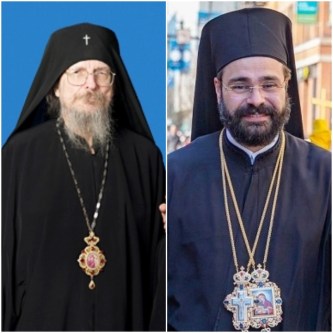
The following open letter appeared on the website of the United States Conference of Catholic Bishops (USCCB) on December 15, 2017. It contains two prominent Orthodox signatures: that of Archbishop Melchisedek (Pleska) of the Orthodox Church in America and of then Archimandrite, now Metropolitan Nathanael (Symeonides) of the Greek Orthodox Archdiocese of America. The letter came to Orthodoxy in Dialogue’s attention only this morning.
As was the case with the infamous Manhattan Declaration of November 2009, once again Orthodox spokesmen have made common cause with Roman Catholics, Anglicans, Lutherans, Muslims, Presbyterians, Southern Baptists, the Church of God in Christ, the Seymour Institute for Black Church and Policy Studies, the National Hispanic Christian Leadership Conference, and the Bruderhof to produce a purely ideological statement lacking any of the theological nuance and pastoral spirit of Orthodox Christianity, any engagement with the evolving science of gender identity formation, any consultation with actual transgender or intersex people, or even any familiarity with the proper vocabulary used in the discussion of these questions.
Orthodoxy in Dialogue has an extensive Sexuality and Gender section in our Archives by Author. In particular we draw your attention to “Transgenderism” Isn’t a ThingIntersex vs. TransgenderWhy Sex Is Not Binary, and our own open letter of September 24, 2018, Sexuality & Gender: Open Letter to the Assembly of Canonical Orthodox Bishops of the United States of America. While our open letter elicited the predictable condemnations and guffaws of derision from the predictable blogs and websites, we beg our hierarchs, priests, deacons, monastics, theologians, and laity to read it carefully: human lives are at stake.

pjimage (18)

Archbishop Melchisedek and Metropolitan Nathanael

Created Male and Female: An Open Letter from Religious Leaders

December 15, 2017

Dear Friends: 

As leaders of various communities of faith throughout the United States, many of us came together in the past to affirm our commitment to marriage as the union of one man and one woman and as the foundation of society. We reiterate that natural marriage continues to be invaluable to American society.  Read More


ON THE INCARNATION: A REFLECTION ON NOTHINGNESS INCARNATE by Gus Hardy

This is the sixth article in our On the Incarnation series for the Nativity Fast. It includes a short video at the end.
tombicxc

The slab on which Christ’s body lay.

+

The Light shines in the darkness, and the darkness has not overcome it.

These words echoed through my mind, along with the faint chanting that echoed in the tomb’s darkness. I had cast my eyes on a few candles that were growing out of a fat mound of water-suspended wax, and made my way over to the font, mesmerized as I crossed the floor. Reaching them, I gazed with intent and cupped my hands around the flickering light, seemingly suspending that which the darkness had not overcome in midair. Taking a breath, I realized in that moment for the first time where I truly was.

Knowing that the opportunity would not likely come again, I was quick and glad to sign up for a 3-week ecumenical immersion in biblical studies that was taking place in Jerusalem (see video below). On the way over, my new friends from Holy Cross in Brookline were swift to give a Catholic such as myself a crash course in all that I would need to know on Orthodoxy (leading in time to the discovery of Orthodoxy in Dialogue). It was during these conversations that I learned on the way about the possibility of staying overnight in the Holy Sepulchre and simply said, “Okay, we’re doing that,” with no thought to plans or schematics. Somehow, a few of us secured spaces to keep vigil, decided to chance it, and prepared to not sleep in the midst of our endless walks and day trips under a baking Mediterranean sun. Read More